How Does Climate Change Affect Travel Insurance?
Understanding how climate change affects travel insurance is essential if you want to protect your travel plans abroad. Weather patterns worldwide have changed, and the unpredictability may lead to trip cancellations and rescheduling. International travel insurance policies cover many climate-related risks, helping you avoid costly cancellations and surprises. However, you must know about the included and excluded risks under the cover and how you can get the most comprehensive protection.

- Home

- Travel Insurance
- Articles - TI
- How Does Climate Change Affect Travel Insurance?
How Does Climate Change Impact International Travel?
Climate change has impacted every country in some way, and naturally, tourism at many destinations. Here's how this phenomenon impacts international travel:
-
Increased Number of Natural Calamities
The number of natural disasters, such as hurricanes, cyclones, and intense storms, has tripled in the past 30 years. The Australian bushfires, the heatwaves in Europe, and the California wildfires are prominent recent examples. These events make many tourist destinations unsafe, leading to trip cancellations, rescheduling, and fewer tourists.
-
Health Risks Due to Increased Temperatures
Rising global temperatures increase the risk of dehydration and other heat-related health issues. If you travel to tropical countries in Southeast Asia or to European countries like Morocco or Spain, you may need to deal with extreme heat, especially if you are trekking or spending long hours outdoors.
-
Reduced Snowfall
Since 1980, snowfall in Europe has decreased by 34% due to climate change. Countries like Slovenia, Austria, and Switzerland, which are famous for snow sports and winter landscapes, are seeing less snowfall and shorter ski seasons. Consequently, many resorts depend on artificial snow to maintain winter sports.
-
More Flight Disruptions
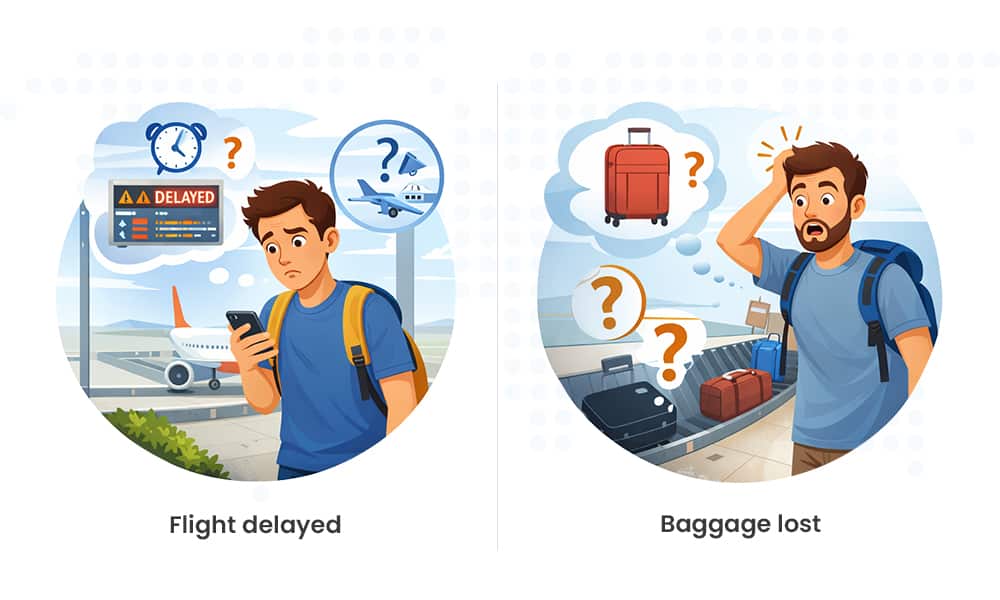
Unpredictable weather patterns caused by climate change increase the likelihood of flight delays, cancellations, and diversions. Even air turbulence and related injuries have increased due to climate change.
How Climate-Related Risks are Covered by Travel Insurance?
International travel insurance offers a safety net for exploring the world, covering the following risks related to climate change:
- Trip Cancellations and DisruptionsIf your trip is cancelled or cut short due to natural disasters like floods, storms, or cyclones, travel insurance can reimburse non-refundable expenses such as flights, hotels, and tours.
- Missed Connections, Flight Delays, and Flight CancellationsYour trip insurance can reimburse additional accommodation, meals, and alternative travel costs if you miss a connecting flight or if flights are delayed or cancelled due to storms, heavy snowfall, or hurricanes.
- Baggage Loss or DelayClimate events can delay flights, leading to late or lost checked baggage. International travel insurance covers the cost of essential items like toiletries, medicines, and clothes, depending on your policy.
- Medical Evacuation and RepatriationEmergency medical services due to natural disasters such as floods or wildfires may necessitate evacuation or repatriation to India in the event of an emergency.
What Climate-Related Events are Not Covered by Travel Insurance?
Although travel insurance covers climate-related risks, some events are not included. Here are some common exclusions you should be aware of:
- Conditions You Were Aware Of: Most policies do not cover events already known to you before booking the trip or getting travel insurance, whichever is earlier. For instance, if a cyclone was reported before you left, you won't be compensated for any resulting cancellations or damage.
- Negligence or Unsafe Travel: Travel insurance may not cover losses if you ignore official weather advisories or travel to a region known for having extreme weather conditions.
- Undeclared Natural Calamities: A trip cancellation or delay caused by a natural disaster is covered under overseas travel insurance only if the local government recognises the event as a calamity. Minor weather issues generally do not qualify for a travel insurance claim.
How to Protect Your Trips from Climate Change Risks with Travel Insurance?
Follow these steps to protect your trips and make sure your travel insurance offers sufficient coverage when you're abroad:
-
Choose the Right Coverage
Select an international travel insurance policy that covers weather-related events such as storms, floods, hurricanes, and heatwaves. Verify if the policy includes coverage for trip cancellations, delays, or emergency medical expenses resulting from these events.
-
Stay Updated on Weather and Travel Advisories
Monitor local weather updates, government travel advisories, and airline alerts to be aware of announced natural disasters and flight cancellations due to extreme weather. Announced calamities are not eligible for trip and flight cancellation claims.
-
Documentation is Essential
Keep copies of bookings, tickets, and receipts. Insurers require these documents when processing claims for cancellations or delays caused by climate events. Having digital copies on your phone or in cloud storage can be helpful.
-
Communicate with Your Insurer
Notify your insurer right away about any weather-related disruptions. Promptly informing them can speed up claims processing and help you get emergency assistance if necessary.
Summing Up
Travel insurance is crucial when planning trips abroad, particularly with climate change causing unpredictable weather patterns. A comprehensive policy can protect you from expensive cancellations, health emergencies, and unforeseen delays, helping you handle climate-related challenges with confidence. Be vigilant, explore all options, and select comprehensive coverage for a stress-free journey.
Travel Insurance: FAQs
-
Q. How does climate change affect travel insurance?
Ans: Climate change has increased the frequency of natural disasters around the world, causing more flight delays, trip cancellations, and trip delays. Travel insurance claims have increased as a result, and insurers must recalculate risk and adjust premiums accordingly. -
Q. How does climate change affect the travel and tourism industry?
Ans: Natural disasters such as cyclones, wildfires, and storms disrupt flights, damage infrastructure, and increase risks at many destinations. This leads to more cancellations, delays, and safety concerns for travellers, impacting tourism businesses and travelling costs. -
Q. Does climate change affect air travel?
Ans: Climate change causes more severe weather events, resulting in more flight cancellations, diversions, and delays. Weather changes also increase the air turbulence experienced by flight passengers, increasing the risk of injury. -
Q. What do insurance companies think of climate change?
Ans: Insurers see climate change as a significant challenge because it increases both the frequency and severity of claims. They respond by incorporating climate change into their risk assessments, raising premiums for high-risk destinations, and updating policy coverage. -
Q. Which type of climate risk can lead to higher travel insurance premiums?
Ans: Destinations vulnerable to floods, cyclones, hurricanes, wildfires, or extreme heat are often regarded as high-risk. Insurers may charge higher premiums for trips to these areas due to the increased probability of claims. -
Q. Can I get travel insurance if there is already a natural disaster where I'm going?
Ans: Travel insurance does not cover known events. If a flood, cyclone, or wildfire has already happened and you purchase insurance afterwards, it won't be covered. -
Q. How can I check whether my policy covers weather-related events?
Ans: The policy wordings provided by your insurer include detailed information on coverage for trip cancellations, delays, emergency medical cover, and natural disasters. Read the inclusions, specific exclusions, and general exclusions of the policy to understand what weather-related claims will be covered.

Does any of the traveller have any pre-existing medical condition like BP, diabetes etc? See what it means ›
Now covers COVID-19
- No medical checkup required
- Pre-existing coverage available
- Instant Policy Issuance
- Medical expenses, Trip cancellation/delay, Loss of baggage & Passport etc.
- 24x7 claims support
* Price shown is for a 90 day trip to Thailand with 50,000 dollar coverage for an adult of age 25 years